Welding Guide

Why fabricators choose Shivshakti Metal for special grade TIG and MIG welding wires

Why Fabricators & OEMs Choose Shivshakti Metal for Special-Grade TIG & MIG Wires

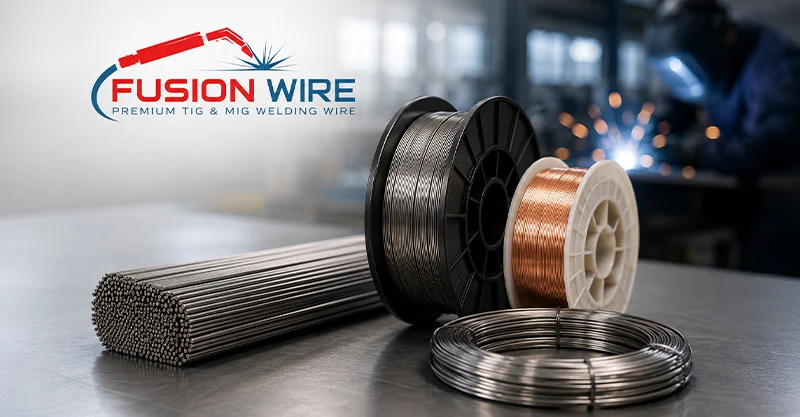
Choosing a welding wire supplier is easy when you weld mild steel. It gets harder when your job needs nickel, Monel, Hastelloy, Stellite or duplex wire, where quality and consistency decide whether a critical weld passes or fails. This is exactly where Shivshakti Metal fits. We are not a general trader. We make special grade TIG and MIG wires, and that focus is why fabricators and OEMs across India keep coming back. Who is Shivshakti Metal? Shivshakti Metal was founded in 2007 by Mr. Viren Tripathi in Ahmedabad. Over 18 plus years we have grown into a manufacturer of special grade TIG and MIG wires under our Fusion Wire brand. Our wires are made under ISO 9001:2015 and supplied through a dealer network across India. You can see our full company profile as one of the established welding wire manufacturers in India on our homepage. What “Special Grade” Actually Means
Read more
ERNiCr-3 vs ERNiCrMo-3 (Inconel 82 vs 625)

Inconel Welding Wire Guide: ERNiCr-3 vs ERNiCrMo-3 (Inconel 82 vs 625) – Which to Use

What is Inconel Welding Wire? “Inconel” is the trade name for a family of nickel-chromium superalloys prized for strength and stability in extreme environments. Inconel welding wires are high-nickel filler metals used to: Weld Inconel and Incoloy base metals (600, 601, 625, 690, 800, 825) Join dissimilar metals — such as stainless steel to carbon steel, or nickel alloys to steel Weld components in high-temperature or corrosive service where stainless steel filler wire would fail The two workhorse grades carry AWS A5.14 classifications: ERNiCr-3 (Inconel 82) and ERNiCrMo-3 (Inconel 625). The defining difference is molybdenum — absent in ERNiCr-3, around 9% in ERNiCrMo-3. What is ERNiCr-3 (Inconel 82) Welding Wire? ERNiCr-3 (UNS N06082), commonly called Inconel Filler Metal 82 or Alloy 82, is a nickel-chromium filler wire alloyed with niobium and manganese but no molybdenum. This gives it excellent high-temperature strength and outstanding resistance to oxidation and scaling. It is

Read more
Everything Every Welder Should Know About Mig Welding Blog Feature

Everything Every Welder Should Know About Mig Welding

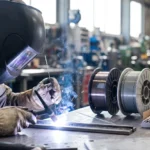
For decades, MIG has been the most prevalent welding method. It’s quick, strong, and versatile, and most people can pick it up quickly. There’s a continual stream of newcomers eager to learn because it’s such a terrific process. In this article, we will cover everything every welder should know about MIG Welding. What Is MIG Welding? Metal Inert Gas (MIG) welding is a type of inert gas welding. It’s a method of melting and joining metals that uses a disposable metal wire electrode to create an electric arc. The MIG wire is passed constantly through the welding gun’s handle and melted into the weld pool. This melted wire and base material pool then solidifies as a solid junction. While most people refer to the procedure as “MIG welding,” it is also known as “Gas Metal Arc Welding,” or “GMAW” for short. What Is MIG Welding Used For? MIG welding is

Read more
Arc Welding - A Complete Guide Blog Feature

Arc Welding – A Complete Guide

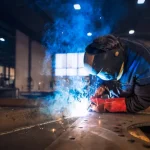
New to the welding world? If your answer is yes, it is unlikely that you know everything about arc welding. However, there is no need to worry. We have got you covered! What Is Arc Welding? Arc welding is a typical welding technology that entails supplying electricity to heat and melt the weld metal using a welding electrode, resulting in the formation of a strong joint over the weld region. Arc welding is a metal-joining fusion welding method. An electric arc generated by an AC or DC power supply generates a high temperature of roughly 6500°F, melting the metal at the joint between two work parts. How Does Arc Welding Process Work? Arc welding can now be done in one of two ways. One method involves the use of a consumable electrode, while the other involves the use of a non-consumable electrode. Consumable Electrode Methods MIG and MAG Metal Inert

Read more
Importance Of Stainless Steel In The Fabrication Industry Blog Feature

Importance Of Stainless Steel In The Fabrication Industry

It’s clear to understand how important stainless steel wire products have become in today’s world. Stainless steel has a wide range of uses, and the list of advantages is long. Nickel , iron, chromium, and other metals combine to form stainless steel. Stainless steel is inert and environmentally friendly. When it comes into touch with water, it also does not react or change its makeup. Stainless steel is also hygienic, easy to clean, long-lasting, and attractive. There are numerous other advantages of stainless steel. Temperature resistance: When it comes to stainless steel fabrication, it’s only tough if your fabricator is utilising outdated equipment. Stainless steel wire is extremely robust, and as a result, it is a cost-effective and long-term solution for any sector. Stainless steel costs are normally constant and do not change much. Stainless steel has a high carbon content, which gives it qualities like strength, lightness, and low

Read more
How To Choose The Right Grade For The Right Applications Blog Feature

How To Choose The Right Grade For The Right Applications?

Stick welding requires practice to perfect, and choosing the right electrode for the job can be similarly difficult. Given the range of welding methods available, deciding which one is best for your shop can be a perplexing and tough decision. Choosing the appropriate welding rod might be difficult because there is no such thing as a universal electrode for welding in every situation. Since there is no one welding method, we need to evaluate the plus and minus points of all the welding procedures. Weld Requirements The first step is to determine what the weld will have to accomplish. What characteristics does it require? What type of metal are you utilising? Fill amount, position, speed of travel, and penetration are the four factors you will need to consider in any weld. It’s considerably more crucial to have a fast-filling material in a heavy weld than it is in a tiny

Read more
Start Chat with Shivshakti Metal on WhatsApp
Scroll to Top

Request a Quote

    This site is protected by reCAPTCHA and the Google Privacy Policy and Terms of Service apply.

    Download Brochure

      This site is protected by reCAPTCHA and the Google Privacy Policy and Terms of Service apply.