Welding Wire

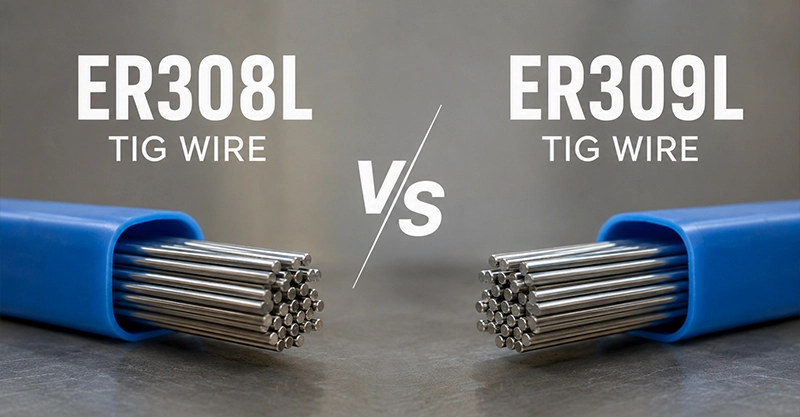
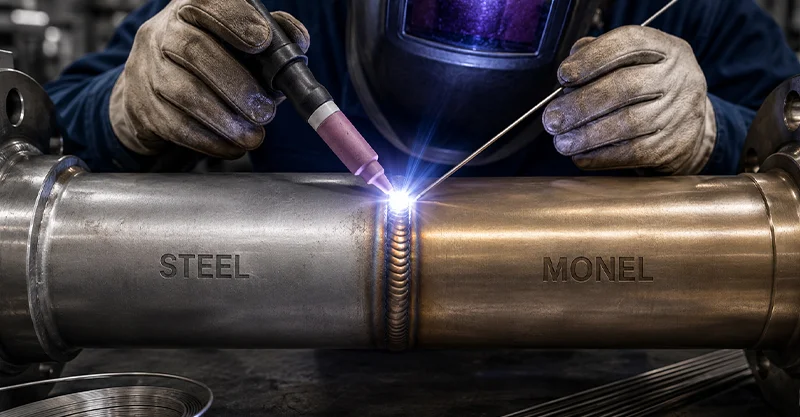
ER308L vs ER309L TIG Wire

ER308L vs ER309L TIG Wire – Which One Should You Choose?

In stainless steel fabrication, selecting the right TIG filler wire is one of the most important decisions for weld strength, corrosion resistance, and long-term performance. Among the most widely used stainless steel TIG wires are ER308L TIG Wire and ER309L TIG Wire. Both are trusted across fabrication industries, pressure vessels, food processing units, pharmaceutical plants, petrochemical projects, and structural stainless steel applications. While both are high-performance stainless steel filler wires, they are designed for different welding purposes. Understanding when to use ER308L and when to use ER309L helps reduce weld failures, improve productivity, and ensure better service life. For fabricators, welding engineers, plant managers, and industrial buyers, this guide explains ER308L vs ER309L TIG wire, their differences, applications, and how to choose the right one. Fusion Wire by Shivshakti Metal offers premium stainless steel TIG/MIG welding wires including ER308L and ER309L for precision industrial welding applications. The catalogue highlights both

Read more
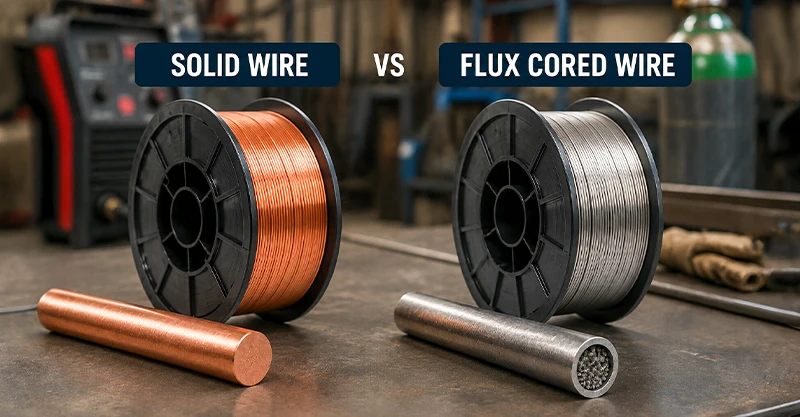
Solid Wire vs Flux Cored Wire

Solid Wire vs Flux Cored Wire – Key Differences Explained

Choosing the right welding wire is one of the most important decisions in fabrication, construction, shipbuilding, heavy engineering, and industrial manufacturing. Among the most commonly used filler materials in industrial welding are solid wire and flux-cored wire. While both are used for strong and reliable welds, they perform differently depending on the environment, material thickness, and welding requirements. For plant managers, welding engineers, procurement teams, and fabricators, understanding the difference between solid wire and flux-cored wire helps improve productivity, reduce weld defects, and optimize long-term operational efficiency. This guide explains solid wire vs. flux-cored wire, their differences, advantages, applications, and how to choose the right one for your welding process. What is Solid Wire? Solid wire is a continuous, solid consumable welding wire mainly used in MIG welding (Gas Metal Arc Welding – GMAW). It requires external shielding gas such as CO2 or an Argon-CO2 mixture to protect the weld

Read more
MIG Wire vs TIG Wire

MIG Wire vs TIG Wire – Key Differences

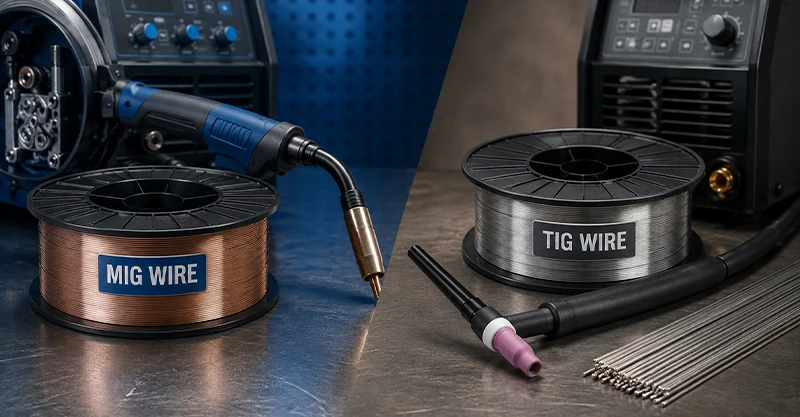
Choosing the right welding wire is critical for achieving strong welds, better productivity, and long-term structural reliability. Among the most commonly used filler materials in industrial fabrication are MIG wire and TIG wire. Both are widely used across stainless steel fabrication, automotive manufacturing, pressure vessels, aerospace, oil & gas, and heavy engineering industries—but they serve very different purposes. For plant managers, welding engineers, procurement teams, and fabricators, understanding the difference between MIG wire and TIG wire helps improve weld quality, reduce rejection rates, and optimize production efficiency. This guide explains MIG wire vs TIG wire, their key differences, applications, advantages, and how to choose the right one for your welding process. What is MIG Wire? MIG wire is a continuously fed consumable welding wire used in MIG welding (Gas Metal Arc Welding – GMAW). It passes automatically through the welding gun and melts to form the weld joint while shielding

Read more
Types of Welding Wires

Types of Welding Wire

Welding wire plays a critical role in achieving strong, clean, and reliable weld joints across fabrication, construction, oil & gas, shipbuilding, automotive, and heavy engineering industries. For industrial buyers, plant managers, and procurement teams, selecting the right welding wire is not just about compatibility – it directly affects weld quality, productivity, corrosion resistance, and long-term structural performance. Different welding applications require different wire types based on material, welding process, shielding gas, and operating conditions. This guide explains the major types of welding wire, their uses, industrial applications, and how to choose the right welding wire for your project. What is Welding Wire? Welding wire is a consumable filler material used in various welding processes to join two metal surfaces together. It melts during the welding process and becomes part of the final weld joint, ensuring strength, durability, and structural integrity. Welding wire is commonly used in: TIG Welding (GTAW) MIG

Read more
What is Welding Wire? Types, Uses and Complete Guide

What is Welding Wire: A Complete Guide

Welding is the backbone of fabrication, infrastructure, heavy engineering, and manufacturing industries. While machines and power sources are important, the real strength of any weld depends on one critical consumable – welding wire. If you are searching for what welding wire is, this complete guide explains its meaning, types, working process, applications, and how to choose the right one for your project. Whether you are a fabricator, OEM, contractor, or engineering student, this guide will help you clearly understand welding wire and its role in achieving strong, durable welds. What is Welding Wire? Welding wire is a metal filler material used in welding processes to join two base metals together. It conducts electrical current and melts during welding to form a strong bond between metal pieces. In simple terms: Welding wire acts as both a conductor and filler metal that melts and fuses materials together. Example: In stainless steel fabrication

Read more
Why Is The Aluminium Welding Wire The Chosen One Blog Feature

Why Is The Aluminium Welding Wire The Chosen One?

You have probably noticed that companies and welders prefer aluminium welding wires  to other metals. Doesn’t it make you question why? Why does Aluminium, out of all the metals available to weld wires, become the preferred option? Why is aluminium the metal of choice for welding out of all the metals? Aluminium is used in a variety of applications be it Aluminium TIG wire, Aluminium MIG wire, or filler wires. Let us understand why. Aluminum is a widely utilised metal for a variety of commercial purposes. Aluminium and its byproducts are used in aircraft, spacecraft, trains, ships, cars, electronic appliances, window frames, and a variety of other applications due to the protective natural and lightweight properties of the metal. The non-corrosive natural properties of aluminium along with its pleasing appearance make it a special part of the welding industry. Aluminum is an excellent metal for a variety of welding. Be

Read more
Start Chat with Shivshakti Metal on WhatsApp
Scroll to Top

Request a Quote

    This site is protected by reCAPTCHA and the Google Privacy Policy and Terms of Service apply.

    Download Brochure

      This site is protected by reCAPTCHA and the Google Privacy Policy and Terms of Service apply.