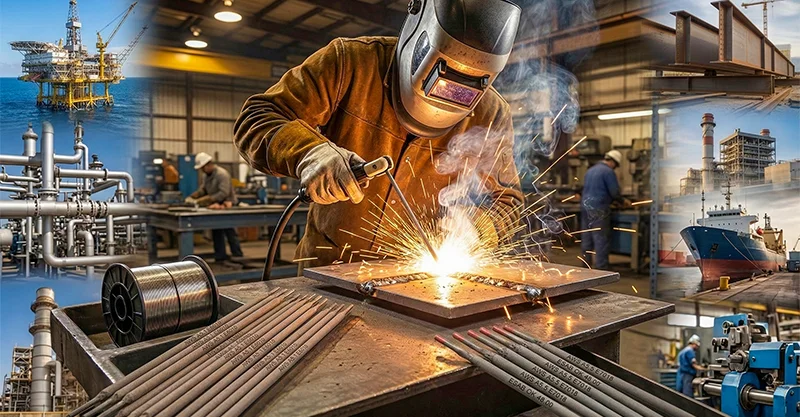
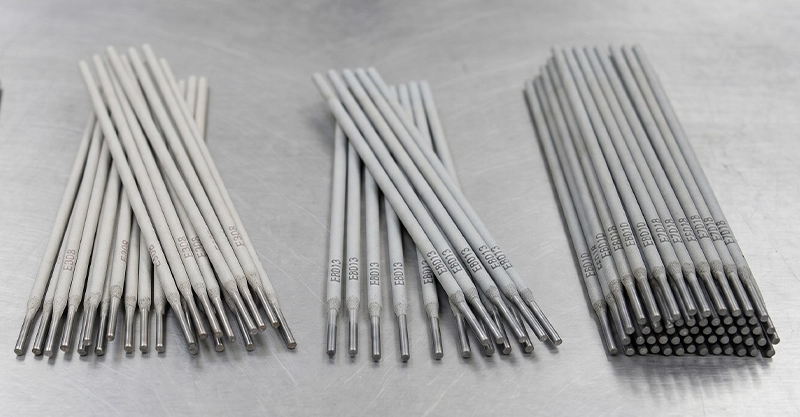
Welding quality depends heavily on selecting the right electrode. In fabrication industries, construction projects, pressure vessel manufacturing, pipelines, heavy engineering, and structural applications, welding electrodes play a major role in ensuring strong joints, durability, and safety.
Many industrial buyers, plant managers, and procurement teams focus only on welding machines, but the electrode selection is equally important. Choosing the wrong welding electrode can lead to weak welds, corrosion issues, cracking, poor penetration, and unnecessary production losses.
This guide explains the different types of welding electrodes, their classifications, industrial uses, and how to choose the right one for your welding process.
What are Welding Electrodes?
A welding electrode is a metal wire or rod used to conduct electrical current and create the weld joint between two metals.
Depending on the welding process, the electrode may either melt and become part of the weld (consumable electrode) or remain unchanged while only generating the arc (non-consumable electrode).
Electrodes are designed for specific metals, welding positions, current types, and industrial conditions.
They are commonly used in:
- Structural fabrication
- Oil and gas industries
- Pressure vessels
- Shipbuilding
- Automotive manufacturing
- Stainless steel fabrication
- Heavy machinery production
- Power plants
Why Electrode Selection Matters
Choosing the correct welding electrode affects:
- Weld strength
- Corrosion resistance
- Heat resistance
- Productivity
- Arc stability
- Penetration quality
- Slag removal
- Final weld appearance
- Repair frequency
- Long-term structural reliability
Incorrect selection increases downtime, rejects, and maintenance costs.
Types of Welding Electrodes
Welding electrodes are mainly divided into two major categories:
- Consumable Electrodes
- Non-Consumable Electrodes
Let us understand both in detail.
1. Consumable Electrodes
Consumable electrodes melt during welding and become part of the final weld joint.
These are the most commonly used electrodes in industrial welding applications.
Types of Consumable Electrodes
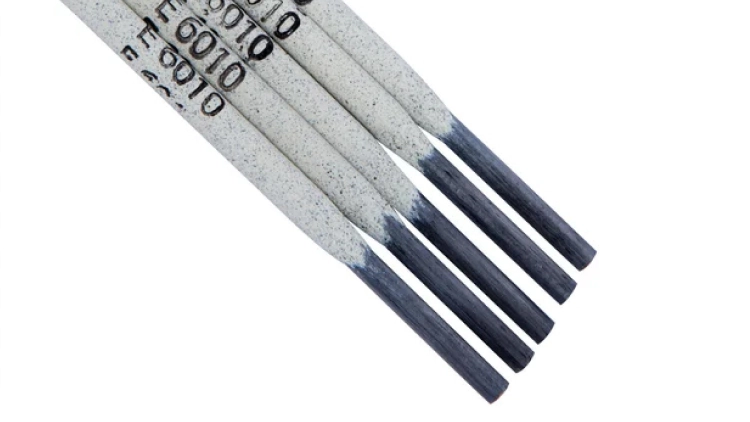
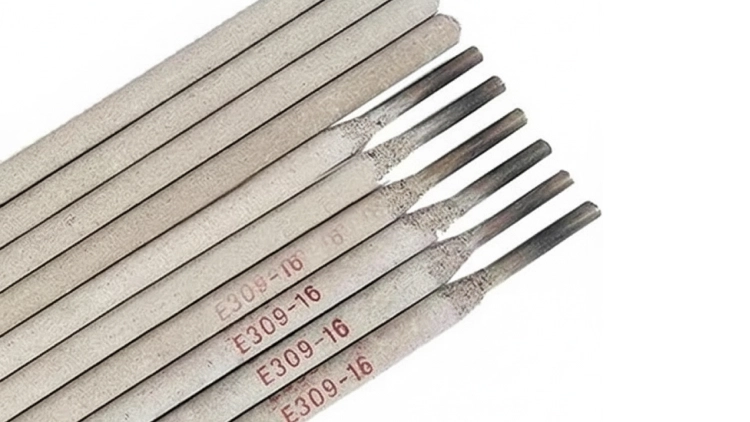
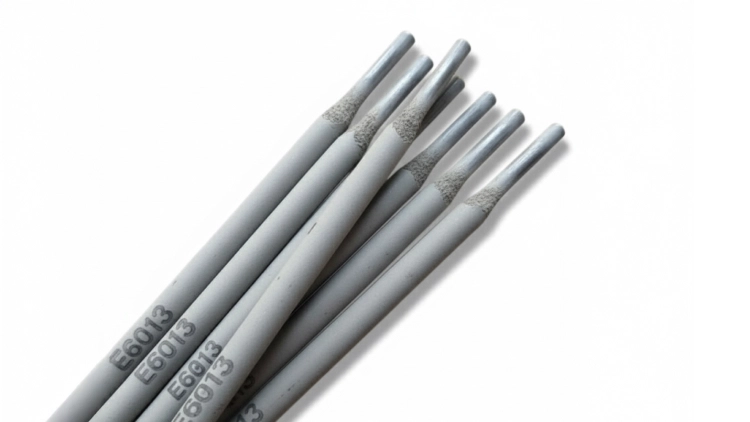
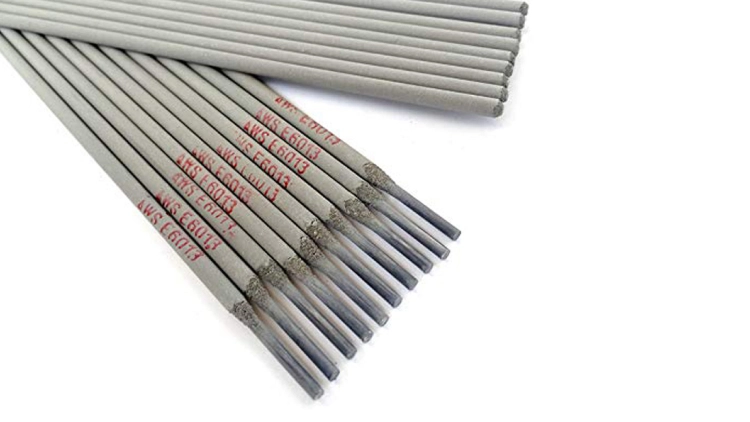
A. Stick Electrodes (SMAW Electrodes)
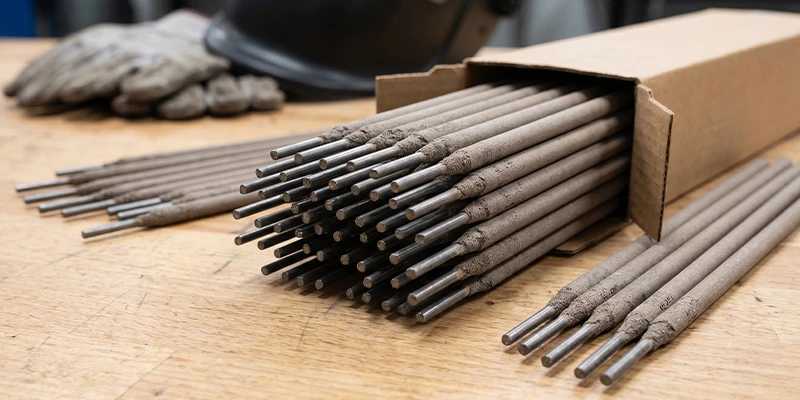
These are flux-coated electrodes used in Shielded Metal Arc Welding (SMAW).
Common Uses:
- Construction sites
- Structural steel fabrication
- Maintenance welding
- Outdoor welding applications
Popular Grades:
- E6010
- E6013
- E7018
- E7024
Advantages:
- Easy to use
- Suitable for outdoor work
- Good penetration
- Cost-effective
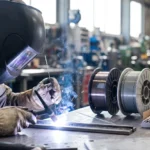
B. MIG Wire Electrodes (GMAW)
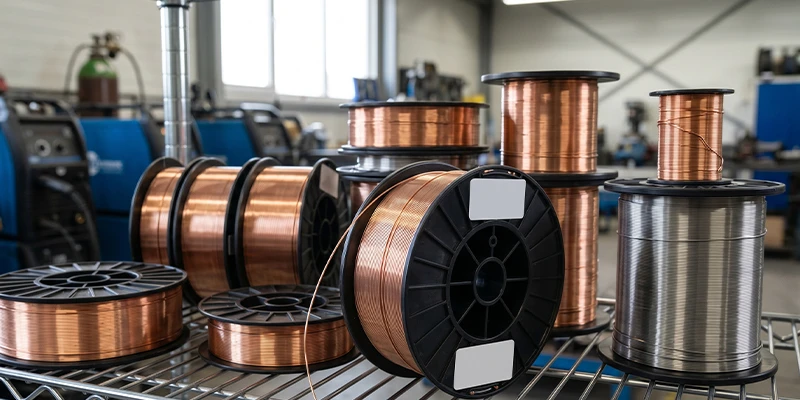
Used in Gas Metal Arc Welding (MIG welding), these electrodes continuously feed through the welding gun.
Common Uses:
- Automotive industries
- Sheet metal fabrication
- Production welding
- Stainless steel manufacturing
Advantages:
- High productivity
- Fast welding speed
- Clean weld finish
- Suitable for automation
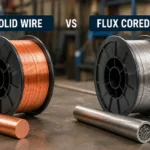
C. Flux-Cored Electrodes (FCAW)
These tubular wire electrodes contain flux inside the wire.
Common Uses:
- Heavy fabrication
- Shipbuilding
- Pipeline welding
- Structural projects
Advantages:
- Deep penetration
- High deposition rate
- Better performance in outdoor conditions
2. Non-Consumable Electrodes
These electrodes do not melt during welding. They only create the arc and may require separate filler material.
Types of Non-Consumable Electrodes
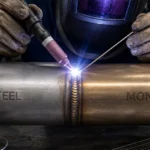
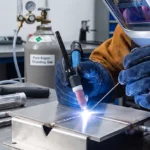
A. Tungsten Electrodes (TIG Welding)
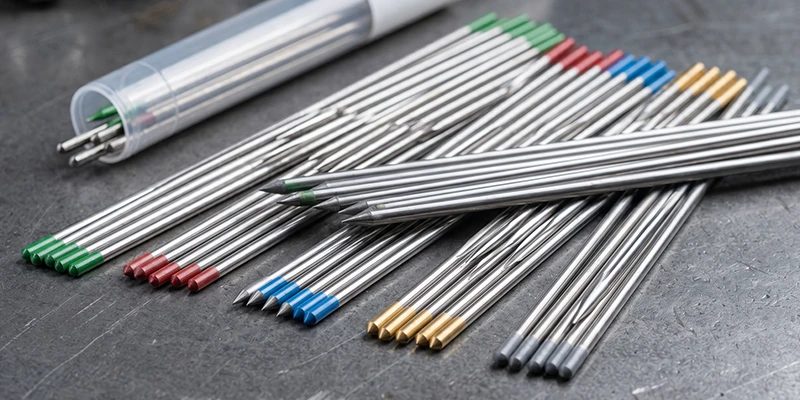
Used in Gas Tungsten Arc Welding (GTAW/TIG).
These are highly preferred where precision and clean welds are required.
Common Uses:
- Aerospace
- Stainless steel fabrication
- Pharmaceutical equipment
- Food-grade piping
- High-precision fabrication
Advantages:
- Superior weld quality
- Clean finish
- Excellent control
- Minimal spatter
B. Carbon Electrodes
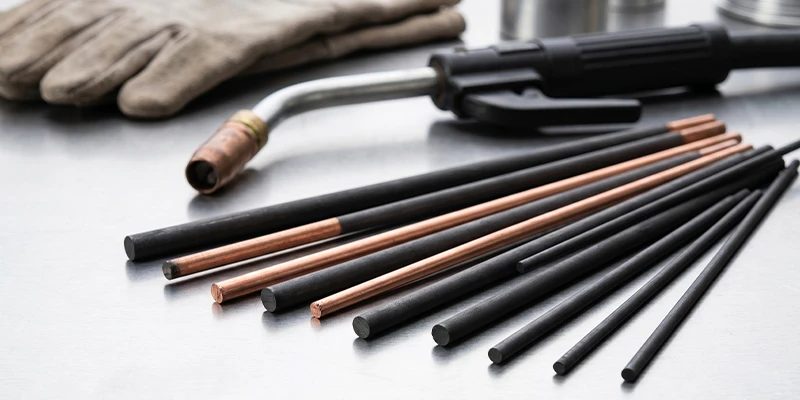
Used mainly for cutting, gouging, and repair work.
Common Uses:
- Foundries
- Repair workshops
- Heavy maintenance industries
Consumable vs Non-Consumable Electrodes
| Feature | Consumable | Non-Consumable |
|---|---|---|
| Melts During Welding | Yes | No |
| Becomes Part of Weld | Yes | No |
| Additional Filler Required | Usually No | Often Yes |
| Productivity | High | Moderate |
| Precision | Moderate | Very High |
| Common Process | SMAW, MIG, FCAW | TIG, Carbon Arc |
Common Industrial Electrode Grades
Different industries require different filler materials depending on the base metal.
Common electrode material categories include:
- Stainless Steel Welding Electrodes
- Duplex Steel Welding Electrodes
- Super Duplex Welding Electrodes
- Nickel Alloy Welding Electrodes
- Inconel Welding Electrodes
- Monel Welding Electrodes
- Aluminium Welding Electrodes
- Mild Steel Welding Electrodes
- Copper Nickel Welding Electrodes
- Titanium Welding Electrodes
For corrosion-resistant and high-temperature applications, selecting the right alloy-grade electrode is critical.
Key Factors to Consider Before Selection
1. Base Metal Type
The electrode must be compatible with the parent metal.
Example:
Stainless steel requires stainless steel electrodes.
2. Welding Position
Flat, horizontal, vertical, and overhead welding positions require different electrode characteristics.
3. Power Source
AC or DC current compatibility affects electrode selection.
4. Mechanical Strength Required
Load-bearing structures need higher tensile strength electrodes.
5. Environmental Conditions
Outdoor welding may require low-hydrogen or flux-cored electrodes.
6. Corrosion Resistance
Chemical plants and marine industries need highly corrosion-resistant electrodes.
7. Heat Resistance
Power plants and high-temperature applications require heat-resistant filler materials.
Common Mistakes to Avoid
Avoid these common selection errors:
- Choosing electrodes only based on price
- Ignoring base metal compatibility
- Using incorrect storage conditions
- Selecting the wrong current type
- Not checking tensile strength requirements
- Using low-grade electrodes for critical applications
- Ignoring moisture control for low-hydrogen electrodes
These mistakes can significantly affect weld quality and operational safety.
Conclusion
Understanding the types of welding electrodes helps industries improve weld quality, reduce failures, and optimize production efficiency.
Whether you are working in fabrication, pressure vessels, stainless steel manufacturing, or industrial construction, the right electrode directly impacts productivity and long-term performance.
For industrial buyers and welding professionals, electrode selection should never be treated as a small decision—it is a major factor in project success.
Working with a reliable welding electrode manufacturer and supplier ensures consistent quality, proper certification, and dependable technical support.