Monel filler wire is the go-to consumable for welding nickel-copper alloys used in the world’s harshest marine and chemical environments. The most widely specified grade is ERNiCu-7 – a titanium-bearing nickel-copper wire that produces dense, porosity-free welds with excellent seawater and acid resistance. This guide explains ERNiCu-7 Monel filler wire – its composition, grades and forms, key applications, and exactly how to choose the right one for your job.
What is Monel Filler Wire (ERNiCu-7)?
ERNiCu-7 (UNS N04060), commonly known as Monel Filler Metal 60 or Alloy 60, is a nickel-copper filler wire classified under AWS A5.14 for TIG (GTAW) and MIG (GMAW) welding. It is the matching filler for welding Monel alloy 400 and other nickel-copper alloys.
Its defining feature is a controlled addition of titanium, which deoxidises the weld pool and prevents the porosity that plagues nickel-copper welds made with base-composition filler. The result is sound, corrosion-resistant weld metal that matches the base alloy’s outstanding performance in seawater and many acids.
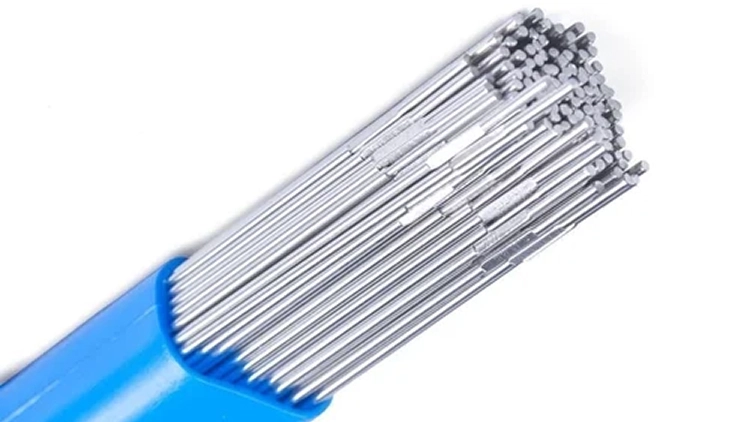
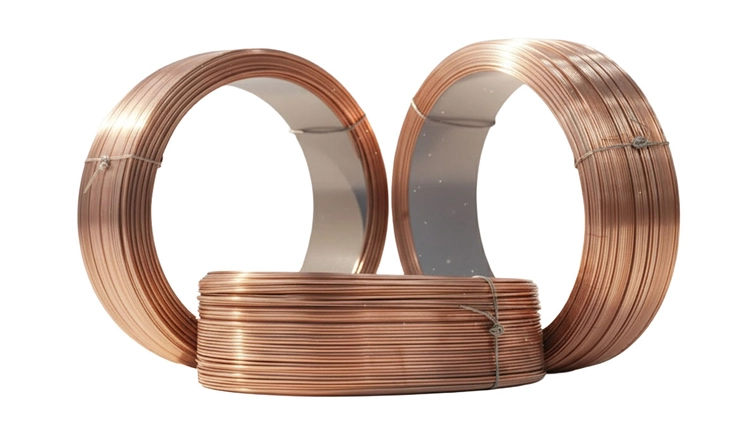
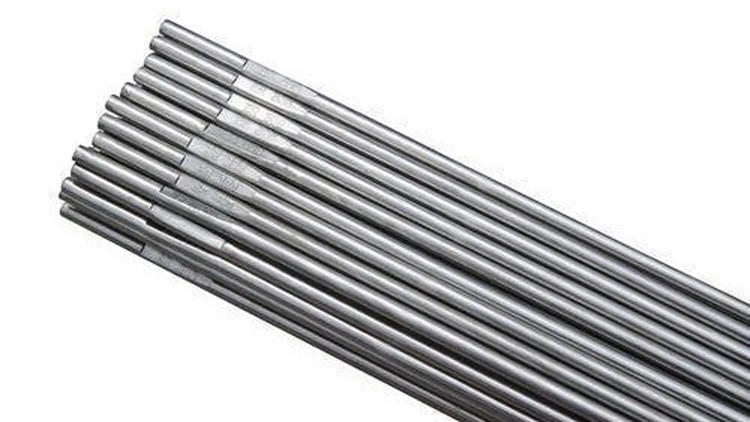
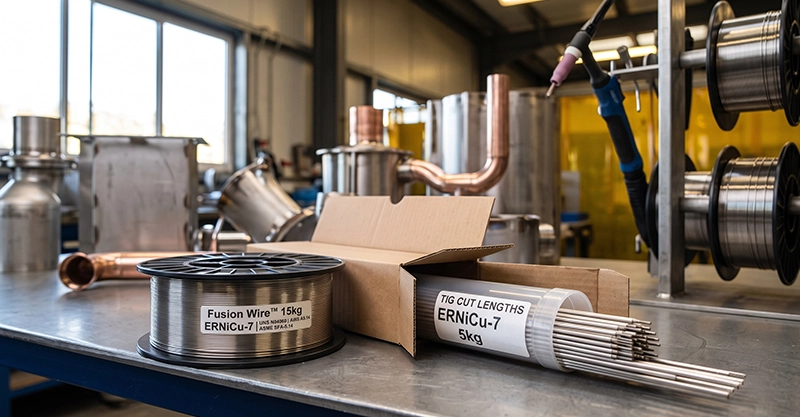
Fusion WireTM by Shivshakti Metal manufactures ERNiCu-7 Monel filler wire in-house under ISO 9001:2015, in TIG cut-lengths (1.0-5.0 mm) and MIG spools (0.8-1.6 mm), supplied PAN India.
ERNiCu-7 Chemical Composition
| Element (wt %) | ERNiCu-7 (Monel 60) |
|---|---|
| Nickel + Cobalt (Ni) | 62.0 – 69.0 |
| Copper (Cu) | Balance (~28) |
| Titanium (Ti) | 1.5 – 3.0 |
| Manganese (Mn) | ≤ 4.0 |
| Iron (Fe) | ≤ 2.5 |
| Silicon (Si) | ≤ 1.25 |
| Aluminium (Al) | ≤ 1.25 |
| Carbon (C) | ≤ 0.15 |
Values are nominal per AWS A5.14 / SFA-5.14; refer to the batch product datasheet for certified chemistry. The titanium content is what controls weld porosity in nickel-copper alloys.
Grades & Forms of Monel Filler Wire
“Monel filler” covers a small family of nickel-copper consumables. Choosing correctly starts with knowing which one matches your base alloy and process:
| Product / Grade | Type | Use |
|---|---|---|
| ERNiCu-7 (Monel 60) | Bare TIG / MIG wire | Welding Monel 400 & nickel-copper alloys; surfacing steel |
| ENiCu-7 (Monel 190) | Covered electrode (SMAW) | Stick welding of the same nickel-copper alloys |
| ERCuNi (70/30, 90/10) | Copper-nickel wire | For copper-nickel alloys – NOT for Monel (do not confuse) |
| Monel 64 (ERNiCu-8) | Age-hardenable wire | Used for Monel K-500 (age-hardenable base alloy) |
For standard Monel 400 fabrication, ERNiCu-7 is the correct choice for TIG and MIG, with ENiCu-7 as the stick electrode equivalent.
Applications of Monel (ERNiCu-7) Filler Wire
| Industry | Typical Applications |
|---|---|
| Marine & Shipbuilding | Propeller shafts, pumps, valves, seawater piping, fasteners |
| Chemical Processing | Hydrofluoric acid service, sulphuric & dilute acids, heat exchangers |
| Oil & Gas | Wellhead components, valves, sour-service parts |
| Desalination & Power | Seawater handling, condenser and feedwater equipment |
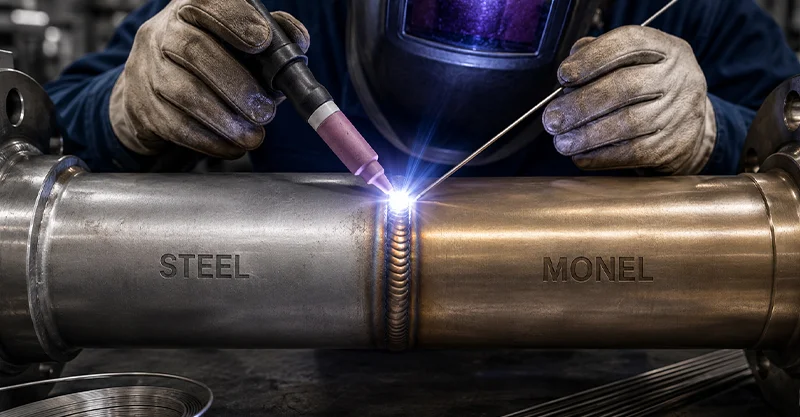
| Dissimilar & Overlay | Joining Monel to steel; nickel-copper overlay on steel |
ERNiCu-7 is especially valued wherever seawater corrosion resistance is critical – Monel’s signature strength.
How to Choose the Right Monel Filler Wire
- Welding Monel 400 or nickel-copper alloys? Use ERNiCu-7 (TIG/MIG) or ENiCu-7 (stick).
- Joining Monel to steel? ERNiCu-7 is the standard filler for this dissimilar joint and for nickel-copper overlay on steel.
- Welding Monel K-500 (age-hardenable)? Use the age-hardenable Monel 64 (ERNiCu-8) filler, not ERNiCu-7.
- Welding copper-nickel (90/10 or 70/30)? That needs ERCuNi copper-nickel wire – not Monel filler. Do not confuse the two.
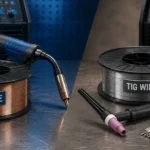
- Choosing TIG vs MIG? Use TIG for roots, thin sections and pipe; pulsed MIG for higher-productivity fill on thicker sections. See our TIG welding wire and MIG welding wire ranges.
Welding Tips for Monel Filler Wire (ERNiCu-7)
- Cleanliness is critical: remove all grease, oil, paint, and sulphur-bearing contaminants; nickel-copper alloys are prone to hot cracking from contamination.
- Use the titanium-bearing filler: always weld with ERNiCu-7 (not base-composition wire) to control porosity.
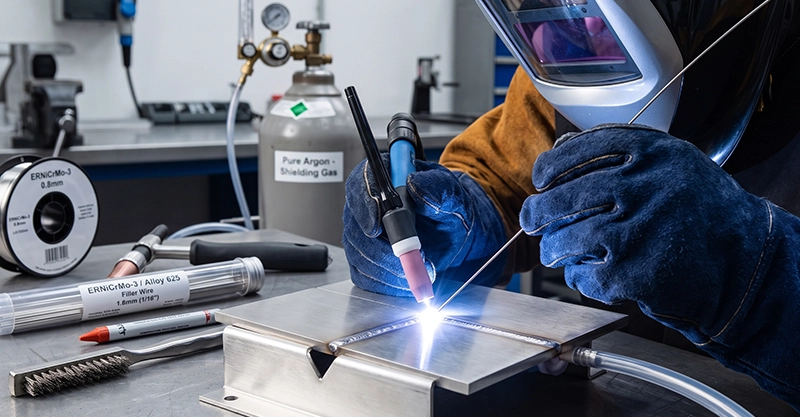
- Shielding gas: pure argon for TIG; argon or argon-helium for MIG. Avoid CO2 and oxygen additions.
- Low heat input: stringer beads, controlled interpass temperature; preheat is generally not required.
- Keep dilution low: minimise iron pick-up when surfacing steel to protect corrosion resistance.
Common Mistakes to Avoid
- Confusing Monel filler (ERNiCu-7) with copper-nickel filler (ERCuNi) – different alloys
- Using ERNiCu-7 on age-hardenable Monel K-500 instead of Monel 64
- Welding with base-composition wire that lacks titanium (causes porosity)
- Contamination from grease, sulphur, or a brush used on carbon steel
- Excessive heat input and high interpass temperature
- Heavy dilution with steel during overlay, reducing corrosion resistance
Need the Right Monel Filler Wire for Your Project?
Our technical team helps you match ERNiCu-7 wire, diameter, and form to your base metal and welding process – backed by in-house manufacturing and ISO 9001:2015 quality.
Conclusion
ERNiCu-7 (Monel 60) is the standard filler wire for welding Monel 400 and nickel-copper alloys, delivering dense, porosity-free welds with the seawater and acid resistance these applications demand. The key is matching the filler to the base alloy – ERNiCu-7 for standard Monel, Monel 64 for K-500, and ERCuNi for copper-nickel – and welding clean with low heat input.
Sourcing certified ERNiCu-7 wire from a trusted welding wire manufacturer ensures consistent chemistry, controlled titanium content, and reliable performance in critical marine and chemical service.