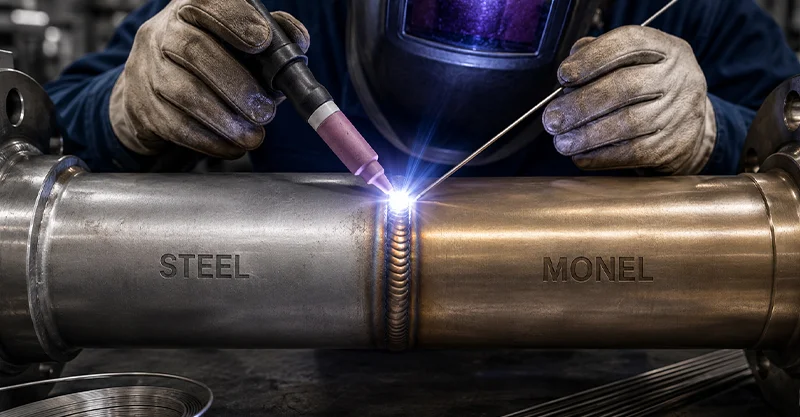
Joining Monel to steel is one of the trickiest jobs a fabricator faces. You are welding two very different metals, and the filler wire you pick decides whether the joint holds or cracks in service. Pick the wrong wire and you get porosity, cracking, or a weld that corrodes fast. This guide covers which filler wire to use for Monel to steel, and the step by step procedure that gives you a sound, reliable joint.
Why Welding Monel to Steel is Difficult
Monel is a nickel copper alloy built for seawater and chemical service. Steel, whether carbon or stainless, behaves very differently under the arc. When you melt them together, three problems show up.
- Iron from the steel dilutes into the weld and can lower its corrosion resistance and toughness.
- Nickel copper weld metal is sensitive to sulphur, grease, and other contamination, which causes hot cracking.
- The two metals expand and contract at different rates, so a restrained joint can crack if heat is not controlled.
The fix is to use a nickel based filler wire that tolerates dilution, and to weld clean with low heat input.
Which Filler Wire to Use for Monel to Steel
Never use a plain carbon steel or stainless steel filler for this joint. Carbon steel filler has no corrosion resistance, and stainless filler tends to crack when it mixes with nickel copper. A nickel based filler is the correct choice. The right one depends on what the Monel is being joined to.
| Dissimilar Joint | Recommended Filler Wire | Notes |
|---|---|---|
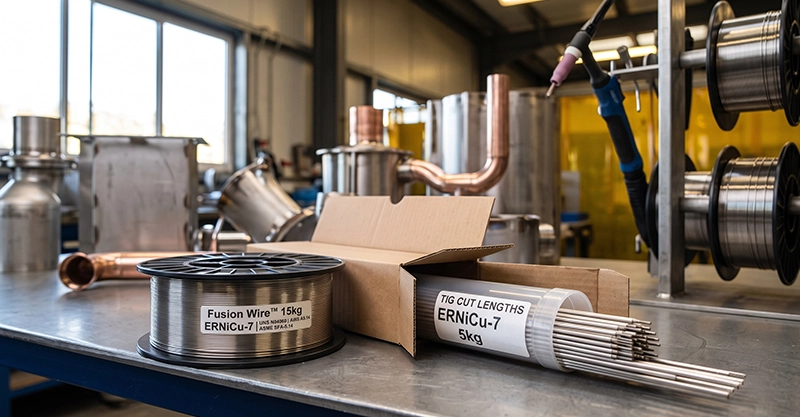
| Monel 400 to carbon or low alloy steel | ERNiCu-7 (Monel 60) | Works for most jobs. For critical or restrained joints, butter the steel side first with ERNi-1. |
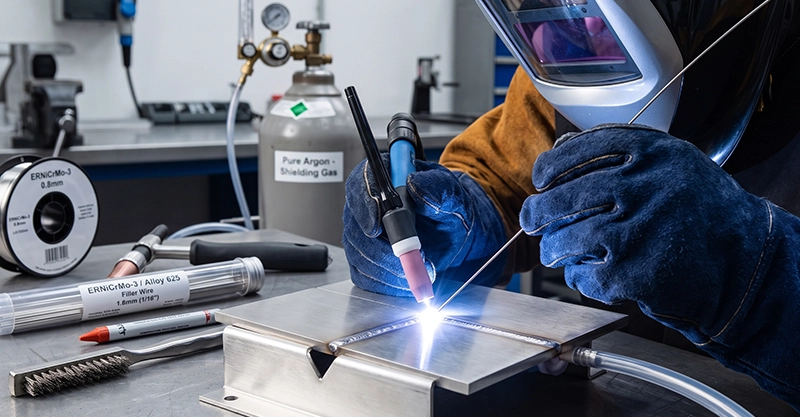
| Monel 400 to stainless steel | ERNiCrMo-3 (Inconel 625) | Tolerates dilution well and resists cracking on the stainless side. |
| Critical or heavily restrained joints | ERNi-1 buttering layer, then ERNiCu-7 | The nickel buttering layer lowers iron dilution and cracking risk. |
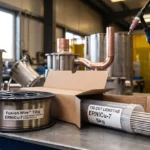
In short, ERNiCu-7 is the standard for Monel to carbon steel, and Inconel 625 filler is the safer pick when the other side is stainless. For grade details see our Monel filler wire (ERNiCu-7) guide.
What is Buttering, and When Should You Do It?
Buttering means laying a layer of nickel filler on the steel face before you make the actual joint. You weld a nickel layer onto the steel side using ERNi-1, then join that buttered face to the Monel with ERNiCu-7. This keeps the final weld away from raw carbon steel, so less iron dilutes into it. Butter the joint when it is thick, heavily restrained, or in critical service. For light, low stress work you can often skip it.
Step by Step Procedure for Welding Monel to Steel
- Prepare the joint with a slightly wider bevel than you would use on steel, since nickel alloys do not penetrate deeply.
- Clean both sides fully. Remove oil, grease, paint, rust, and mill scale for at least 25 mm back from the joint. Use a dedicated stainless brush, never one used on carbon steel.
- If the joint is critical, butter the steel side with ERNi-1 and clean that layer before continuing.
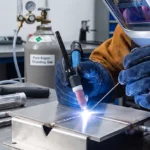
- Set up for TIG on the root with pure argon shielding and a back purge. Use DCEN and a pointed tungsten.
- Run stringer beads with low heat input. Avoid wide weaving so you limit how much iron dilutes into the weld.
- Keep the interpass temperature low and let the joint cool between passes.
- Fill with ERNiCu-7 for a carbon steel side, or ERNiCrMo-3 where the joint meets stainless.
- Clean and inspect the finished weld. Remove any oxide, and passivate if the part sees corrosive service.
Preheat and Post Weld Heat Treatment
Monel does not need preheat. Thick carbon steel on the other side may call for a small preheat based on its own thickness and grade, so follow the steel requirement, not the Monel. Post weld heat treatment is usually not required for these joints, and unnecessary heat can do more harm than good. Follow your project specification where one applies.
Common Mistakes to Avoid
- Using carbon steel or stainless filler instead of a nickel based wire.
- Letting too much iron dilute into the weld by running hot or weaving wide.
- Skipping the buttering layer on a thick or restrained joint.
- Welding over grease, sulphur, or scale, which leads to cracks and porosity.
- Forgetting the argon back purge, which leaves an oxidised root.
- Ignoring galvanic corrosion in service. Design and coat the joint with that in mind.
Need Help Choosing the Right Filler Wire?
Our technical team helps you match the filler wire, diameter, and procedure to your exact Monel and steel combination.
Conclusion
Welding Monel to steel comes down to a few clear rules. Use a nickel based filler, ERNiCu-7 for a carbon steel side and Inconel 625 for a stainless side. Butter the joint when it is thick or critical. Weld clean, keep the heat low, and control dilution. Do that, and a dissimilar joint that scares most fabricators becomes routine.
Consistent, certified filler wire from a trusted welding wire manufacturer is the starting point for every sound Monel to steel weld.