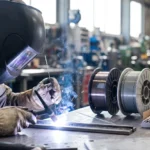
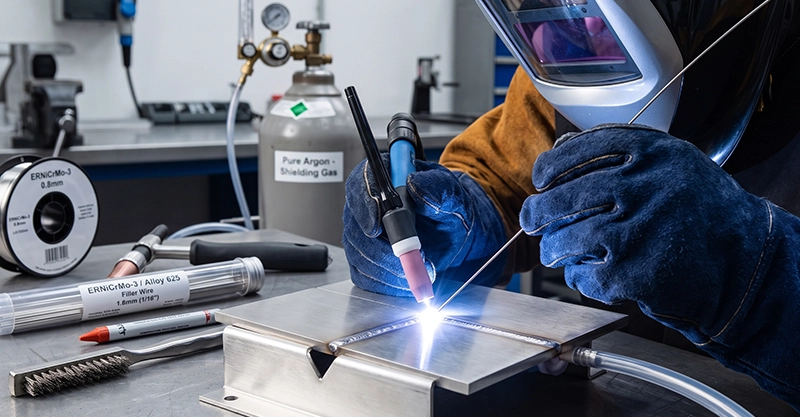
Inconel 625 (Alloy 625) is one of the toughest nickel-chromium-molybdenum superalloys to weld well – it is sluggish in the weld pool, sensitive to contamination, and unforgiving of excess heat. Get the filler wire, shielding gas, and heat input right, and you get dense, crack-free welds with full corrosion resistance. Get them wrong, and you get porosity, hot cracking, and oxidised roots. This guide shows you exactly how to weld Inconel 625, the correct filler wire, machine settings, step-by-step technique, and the common mistakes to avoid.
What is Inconel 625 and Why is it Hard to Weld?
Inconel 625 (UNS N06625) is a nickel-based superalloy alloyed with chromium, molybdenum, and niobium. It is prized for outstanding corrosion resistance, high strength, and performance from cryogenic temperatures up to high heat – which is why it dominates petrochemical, marine, offshore, aerospace, and chemical applications.
The same properties that make it valuable also make it demanding to weld:
- Sluggish, shallow weld pool – nickel alloys do not flow or penetrate like carbon steel, so joint prep and technique must compensate.
- Low thermal conductivity – heat concentrates fast, so excess heat input causes distortion and cracking.
- Sensitivity to contamination – sulphur, lead, grease, and oils cause hot cracking and porosity.
Choosing the Right Filler Wire for Inconel 625
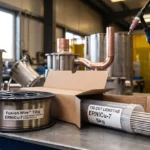
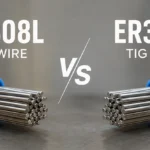
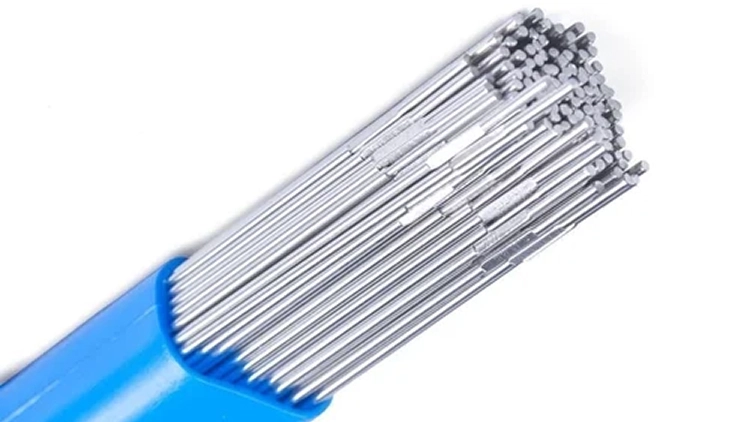
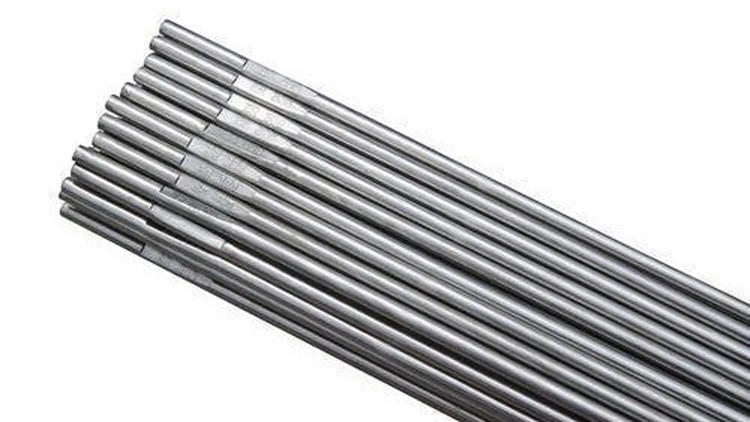
The correct matching filler for welding Inconel 625 is ERNiCrMo-3 (AWS A5.14) – the bare wire for TIG and MIG. For stick welding (SMAW), the equivalent covered electrode is ENiCrMo-3 (AWS A5.11).
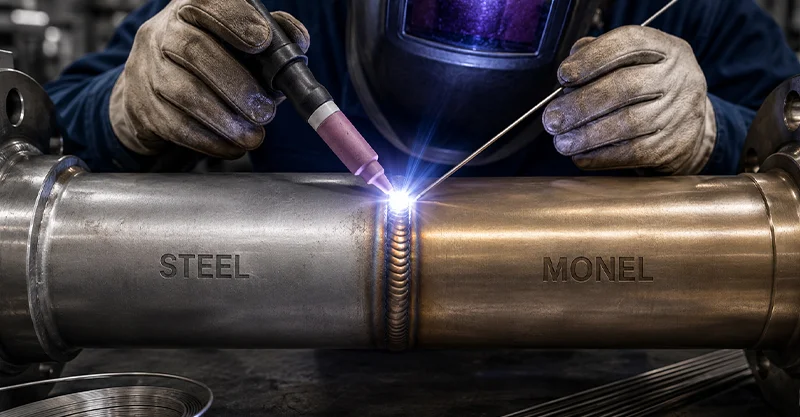
ERNiCrMo-3 deposits weld metal that matches the base alloy’s chemistry, preserving the ~9% molybdenum that gives Inconel 625 its pitting and chloride corrosion resistance. It is also a proven near-universal filler for dissimilar joints – 625 to stainless, carbon, or low-alloy steels.
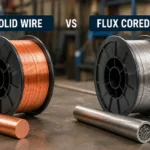
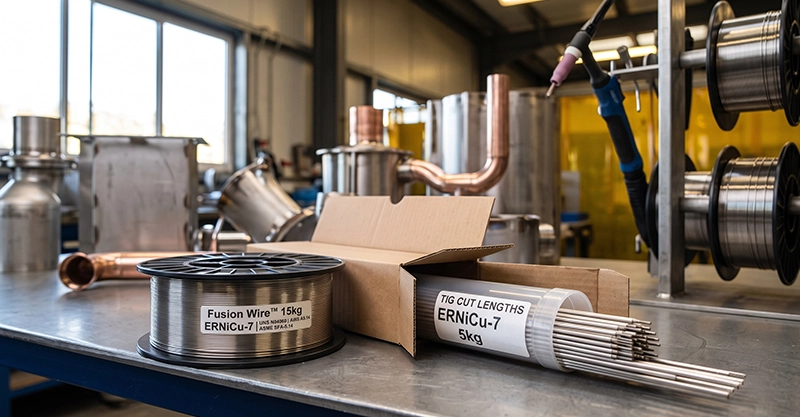
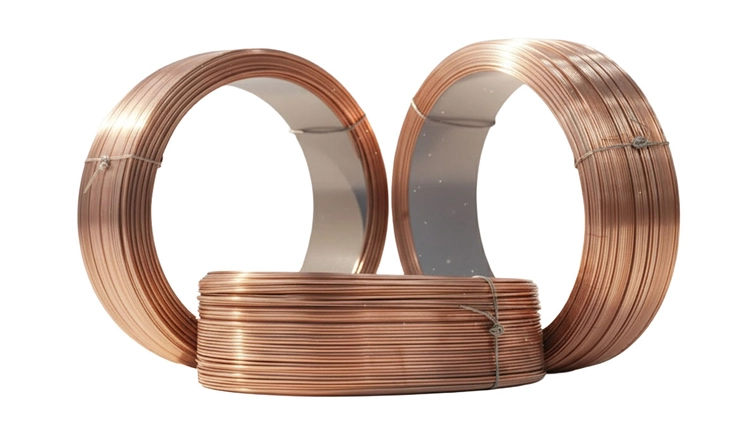
Fusion Wire™ by Shivshakti Metal manufactures ERNiCrMo-3 welding wire in-house under ISO 9001:2015, in TIG cut-lengths (1.0–5.0 mm) and MIG spools (0.8–1.6 mm), supplied PAN India.
Best Welding Process for Inconel 625
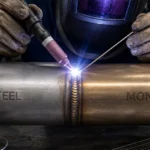
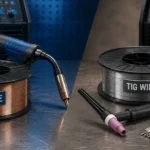
- TIG / GTAW – the first choice for quality, root runs, thin sections, and pipe. Cleanest results with the best control.
- MIG / GMAW (pulsed) – for higher productivity on thicker sections; use pulsed spray transfer for control and low spatter.
- SMAW (stick) – with ENiCrMo-3 electrodes for site work and maintenance.
For most corrosion-critical fabrication, TIG for the root and pulsed MIG or TIG for fill is the reliable combination.
Recommended Welding Settings for Inconel 625
Use direct current electrode negative (DCEN) for TIG, a thoriated, ceriated, or lanthanated tungsten with a sharpened point, and pure argon shielding. The values below are practical starting points – always qualify to your WPS.
| Parameter | TIG (GTAW) | MIG (GMAW – Pulsed) |
|---|---|---|
| Polarity | DCEN (straight) | DCEP (reverse) |
| Filler wire | ERNiCrMo-3 | ERNiCrMo-3 |
| Shielding gas | 100% Argon (99.99%) | Argon or Argon-Helium |
| Tungsten | 2% thoriated / ceriated, pointed | – |
| Back purge | Argon (root side) | Argon (root side) |
| Interpass temp (max) | ~150 °C | ~150 °C |
Approximate TIG amperage by filler diameter:
| Filler Wire Diameter | Typical Current (DCEN) |
|---|---|
| 1.6 mm (1/16″) | ~70-110 A |
| 2.4 mm (3/32″) | ~100-150 A |
| 3.2 mm (1/8″) | ~120-175 A |
Shielding Gas & Back Purging
Use pure argon for TIG; argon or an argon-helium blend for pulsed MIG. Never use CO2, oxygen, or hydrogen additions on nickel alloys – they cause carbon pickup, oxidation, or porosity. Always back-purge the root with argon until oxygen is displaced, or the root will oxidise (“sugar”) and lose corrosion resistance.
Step-by-Step: How to Weld Inconel 625
- Prepare the joint: use a wider included angle (about 70-80°) than steel and a slightly larger root gap to offset the shallow penetration.
- Clean thoroughly: remove all grease, oil, paint, and marking crayons 25 mm each side. Use a dedicated stainless brush and acetone – nickel is highly sensitive to sulphur and contamination.
- Set up gas & polarity: pure argon, DCEN for TIG, back-purge the root side.
- Tack and weld with stringer beads: avoid wide weaving (keep under ~3× wire diameter). Let the pool fill rather than pushing travel speed.
- Control interpass temperature: keep below ~150 °C; let the joint cool between passes.
- Clean between passes: remove any oxide and inspect for defects before the next run.
- Finish: wire-brush or pickle away heat tint on corrosion-critical welds.
Interpass Temperature & Heat Input Control
Low heat input is the single most important discipline when welding Inconel 625. High heat input and high interpass temperature promote hot cracking and can reduce corrosion resistance. Use stringer beads, a maximum interpass temperature around 150 °C, and let the weld cool naturally between passes.
Do You Need Preheat or PWHT for Inconel 625?
Preheat is generally not required for Inconel 625 – simply ensure the metal is above ~15 °C, dry, and clean before welding. Post-weld heat treatment (PWHT) is usually not required either; 625 is normally used in the as-welded condition, and unnecessary heat treatment can be detrimental. Follow your project specification where one applies.
Common Mistakes to Avoid
- Using too much heat input or too high an interpass temperature (causes cracking)
- Weaving too wide instead of running stringer beads
- Using CO2 or oxygen-bearing shielding gas on a nickel alloy
- Skipping the argon back-purge, leaving an oxidised (“sugared”) root
- Contamination – grease, sulphur, or a brush previously used on carbon steel
- Expecting steel-like penetration and preparing a too-narrow joint
- Substituting stainless steel filler instead of ERNiCrMo-3
Need the Right Inconel 625 Filler Wire for Your Project?
Our technical team helps you match ERNiCrMo-3 wire, diameter, and form to your base metal and welding process.
Conclusion
Welding Inconel 625 successfully comes down to three fundamentals: the right filler wire (ERNiCrMo-3), clean preparation, and disciplined low heat input with proper argon shielding and back-purging. Respect the alloy’s sluggish pool and sensitivity to contamination, keep interpass temperature down, and you will produce dense, crack-free welds that retain full corrosion resistance.
Sourcing consistent, certified ERNiCrMo-3 wire from a trusted welding wire manufacturer is the foundation of every sound Inconel 625 weld.