What is Inconel Welding Wire?
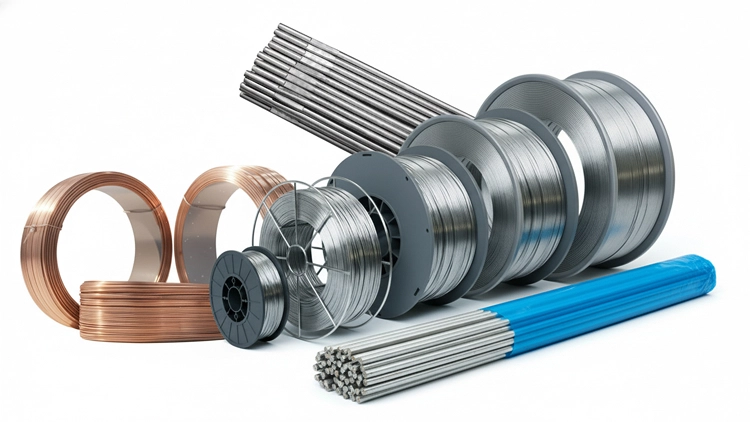
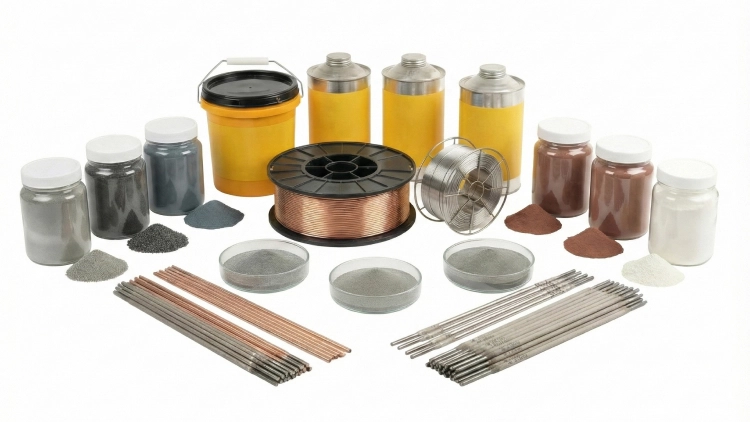
“Inconel” is the trade name for a family of nickel-chromium superalloys prized for strength and stability in extreme environments. Inconel welding wires are high-nickel filler metals used to:
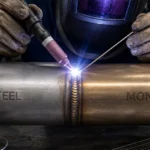
- Weld Inconel and Incoloy base metals (600, 601, 625, 690, 800, 825)
- Join dissimilar metals — such as stainless steel to carbon steel, or nickel alloys to steel
- Weld components in high-temperature or corrosive service where stainless steel filler wire would fail
The two workhorse grades carry AWS A5.14 classifications: ERNiCr-3 (Inconel 82) and ERNiCrMo-3 (Inconel 625). The defining difference is molybdenum — absent in ERNiCr-3, around 9% in ERNiCrMo-3.
What is ERNiCr-3 (Inconel 82) Welding Wire?
ERNiCr-3 (UNS N06082), commonly called Inconel Filler Metal 82 or Alloy 82, is a nickel-chromium filler wire alloyed with niobium and manganese but no molybdenum. This gives it excellent high-temperature strength and outstanding resistance to oxidation and scaling.
It is the go-to filler when heat is the challenge. Typical uses:
- Welding Inconel 600, 601 and 690, and Incoloy 800 / 800H / 800HT
- Furnaces, heat-treatment equipment, and exhaust systems
- High-temperature dissimilar joints (nickel alloys to stainless or carbon steels)
- Weld overlay and cladding on heat-resistant surfaces
ERNiCr-3 holds its strength and resists oxidation up to roughly 980 °C, making it the default choice for hot service rather than wet corrosion.
What is ERNiCrMo-3 (Inconel 625) Welding Wire?
ERNiCrMo-3 (UNS N06625), known as Inconel Filler Metal 625 or Alloy 625, adds around 9% molybdenum plus niobium to the nickel-chromium base. That molybdenum delivers exceptional resistance to pitting, crevice corrosion, and chloride stress-corrosion cracking, along with very high weld strength.
It is the go-to filler when corrosion is the challenge. Typical uses:
- Welding Alloy 625, Incoloy 825, Incoloy 25-6MO and super-duplex stainless steels
- Seawater, offshore, and marine equipment
- Petrochemical, chemical, and fertiliser plants handling acids and chlorides
- Flue-gas desulphurisation (FGD) systems and cryogenic 9% nickel steel (LNG)
- Dissimilar joints to carbon steels, low-alloy steels, and stainless steels
ERNiCrMo-3 performs from cryogenic temperatures upward and is the more versatile, higher-specification filler for demanding corrosion service.
ERNiCr-3 vs ERNiCrMo-3 – Key Differences
| Feature | ERNiCr-3 (Inconel 82) | ERNiCrMo-3 (Inconel 625) |
|---|---|---|
| AWS classification (A5.14) | ERNiCr-3 | ERNiCrMo-3 |
| Common Name | Alloy 82 | Alloy 625 |
| UNS Number | N06082 | N06625 |
| Molybdenum | None | ~8–10% |
| Tensile Strength (Typical) | ~550 MPa+ | ~760 MPa+ |
| High-Temp / Oxidation Resistance | Excellent (to ~980 °C) | Good |
| Pitting / Crevice / Acid Resistance | Moderate | Excellent |
| Primary Strength | Heat resistance | Corrosion resistance | Welds | Inconel 600/601/690, Incoloy 800 | Alloy 625/825, super-duplex, 9% Ni steel |
Chemical Composition Comparison
| Element (wt %) | ERNiCr-3 (Inconel 82) | ERNiCrMo-3 (Inconel 625) |
|---|---|---|
| Nickel (Ni) | ≥ 67 (balance) | ≥ 58 (balance) |
| Chromium (Cr) | 18.0 – 22.0 | 20.0 – 23.0 |
| Molybdenum (Mo) | – | 8.0 – 10.0 |
| Niobium (Nb+Ta) | 2.0 – 3.0 | 3.15 – 4.15 |
| Iron (Fe) | ≤ 3.0 | ≤ 5.0 |
| Manganese (Mn) | 2.5 – 3.5 | ≤ 0.5 |
| Carbon (C) | ≤ 0.10 | ≤ 0.10 |
Values are nominal per AWS A5.14 / SFA-5.14; always refer to the batch product datasheet for certified chemistry.
Advantages of ERNiCr-3 (Inconel 82)
1. Superior High-Temperature Strength
Holds mechanical strength and creep resistance at elevated temperatures – ideal for furnaces and heat-resistant assemblies.
2. Excellent Oxidation Resistance
Resists scaling and oxidation up to ~980 °C, protecting welds in continuous high-heat service.
3. Strong Dissimilar High-Temp Joints
Reliably joins nickel alloys to stainless and carbon steels where the joint runs hot.
4. Crack-Resistant Weld Metal
The niobium addition controls hot cracking for sound, dense welds.
5. Broad Base-Metal Compatibility
Matches Inconel 600/601/690 and Incoloy 800-series base metals used across power and process plants.
Advantages of ERNiCrMo-3 (Inconel 625)
1. Outstanding Corrosion Resistance
The ~9% molybdenum resists pitting, crevice corrosion, and chloride attack in the harshest media.
2. Very High Weld Strength
Delivers higher tensile strength than ERNiCr-3, suiting demanding structural and pressure applications.
3. Excellent in Marine & Seawater Service
A preferred filler for offshore, desalination, and seawater-handling equipment.
4. Reliable for Cryogenic & Dissimilar Joints
Widely used on 9% Ni LNG steel and as a near-universal filler for corrosion-resistant dissimilar welds.
5. Broad Chemical & Petrochemical Use
Handles acids, chlorides, and sour-service conditions in refineries, fertiliser, and chemical plants.
Which One Should You Choose?
Choose ERNiCr-3 (Inconel 82) if:
- High temperature and oxidation are the main risk
- You are welding Inconel 600/601/690 or Incoloy 800-series
- The joint runs in furnaces, exhausts, or heat-treatment equipment
- You need high-temperature dissimilar joints
Choose ERNiCrMo-3 (Inconel 625) if:
- Corrosion, acids, chlorides, or seawater are the main risk
- You are welding Alloy 625/825, super-duplex, or 9% Ni steel
- The application is marine, offshore, petrochemical, or FGD
- You need maximum weld strength with broad corrosion protection
Rule of thumb: fight heat with ERNiCr-3, fight corrosion with ERNiCrMo-3. When unsure, ERNiCrMo-3 is the safer, higher-specification choice – which is why it dominates oil & gas and chemical project specs.
Welding Best Practices for Inconel Filler Wire
- Cleanliness first: grind and degrease the joint – nickel welds are highly sensitive to sulphur, grease, and contamination.
- Control heat input: use stringer beads and lower heat input; nickel alloys have low thermal conductivity, so heat concentrates fast.
- Shielding gas: pure argon for GTAW; argon or argon-helium for GMAW. Back-purge pipe roots to protect the underside.
- Limit weaving: nickel weld pools are sluggish and shallow – keep bead width tight and let the pool fill.
Common Mistakes to Avoid
- Substituting ERNiCr-3 for ERNiCrMo-3 in corrosive service (no molybdenum = corrosion failure)
- Using stainless steel filler on nickel-alloy base metals
- Skipping joint cleaning and inter-pass cleaning
- Excessive heat input causing hot cracking
- Forgetting the back-purge on pipe roots
- Choosing wire on price instead of service condition
Need Help Selecting the Right Inconel Welding Wire?
Our technical team matches the exact grade, diameter, and form to your base metal and service condition.
Conclusion
ERNiCr-3 and ERNiCrMo-3 are both premium Inconel welding wires, but they are not interchangeable. ERNiCr-3 (Inconel 82) is built for high-temperature, oxidation-resistant welding; ERNiCrMo-3 (Inconel 625) is built for corrosion, chlorides, and seawater – with higher weld strength on top.
Matching the filler to the real service condition is the single biggest factor in a weld that lasts for decades. Sourcing from a trusted welding wire manufacturer ensures consistent chemistry, reliable certification, and expert grade-selection support.