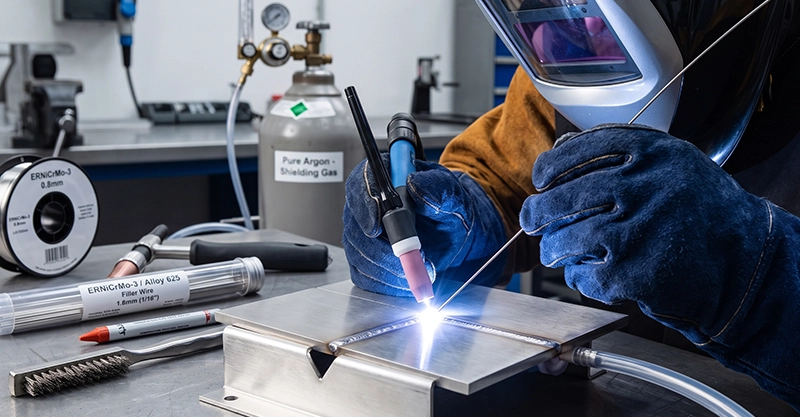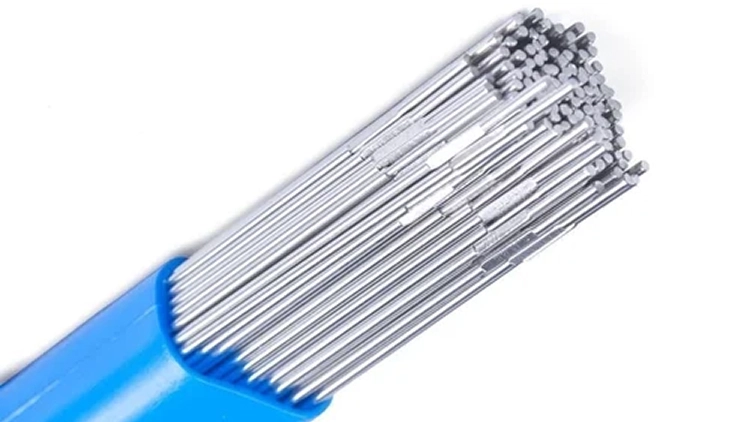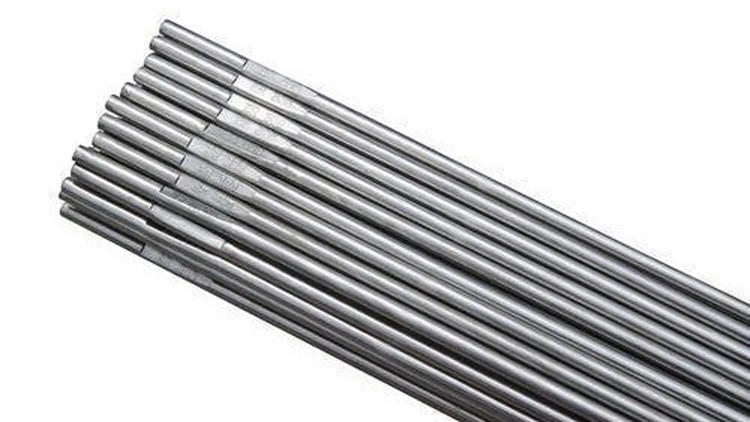
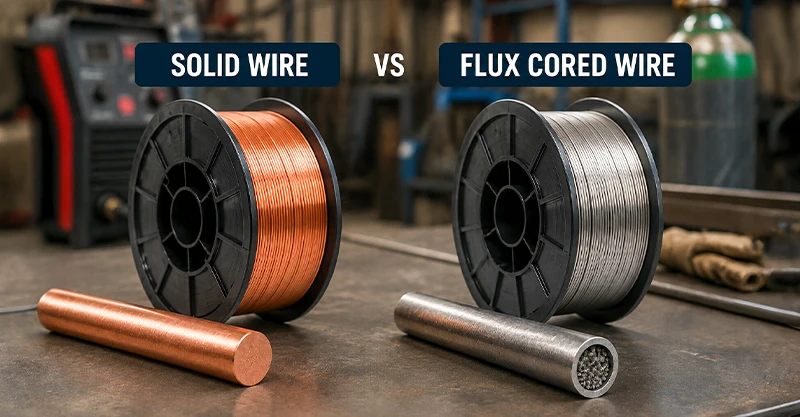
Choosing the right welding wire is one of the most important decisions in fabrication, construction, shipbuilding, heavy engineering, and industrial manufacturing.
Among the most commonly used filler materials in industrial welding are solid wire and flux-cored wire. While both are used for strong and reliable welds, they perform differently depending on the environment, material thickness, and welding requirements.
For plant managers, welding engineers, procurement teams, and fabricators, understanding the difference between solid wire and flux-cored wire helps improve productivity, reduce weld defects, and optimize long-term operational efficiency.
This guide explains solid wire vs. flux-cored wire, their differences, advantages, applications, and how to choose the right one for your welding process.
What is Solid Wire?
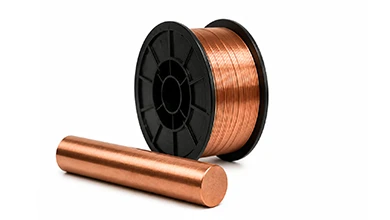
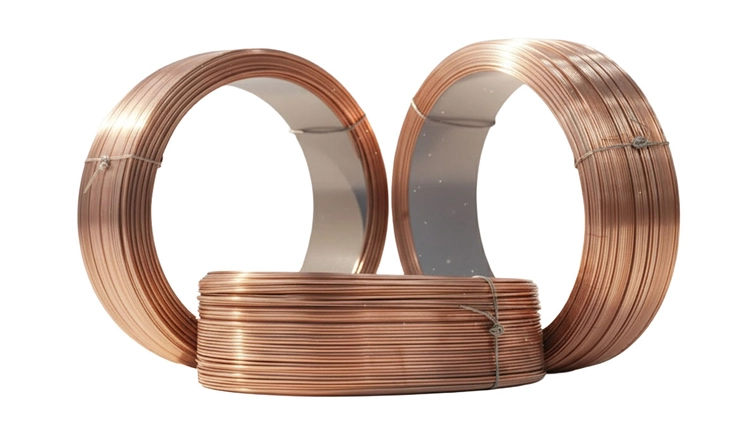
Solid wire is a continuous, solid consumable welding wire mainly used in MIG welding (Gas Metal Arc Welding – GMAW).
It requires external shielding gas such as CO2 or an Argon-CO2 mixture to protect the weld pool from contamination.
Solid wire is commonly used for:
- Automotive manufacturing
- Sheet metal fabrication
- Stainless steel fabrication
- Indoor industrial welding
- General production welding
Popular solid wire grades include:
- ER70S-6
- ER308L
- ER309L
- ER316L
- Aluminium MIG wire grades
Solid wire is preferred for cleaner welds and high-speed indoor production.
What is Flux Cored Wire?
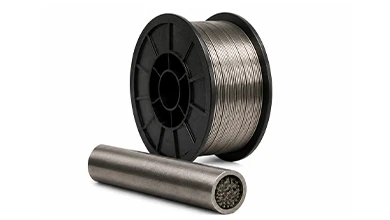
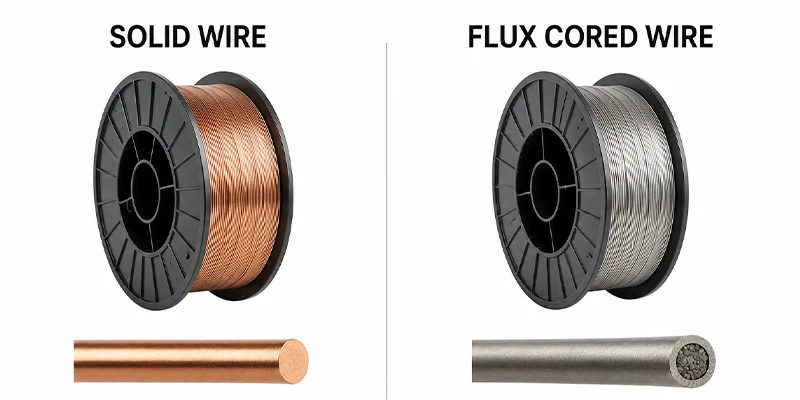
Flux-cored wire is a tubular welding wire filled with flux inside.
It is mainly used in Flux-Cored Arc Welding (FCAW) and may work with or without external shielding gas, depending on the wire type.
The internal flux helps protect the weld area and improves penetration.
Flux-cored wire is commonly used for:
- Structural steel fabrication
- Shipbuilding
- Construction projects
- Heavy fabrication
- Outdoor welding applications
- Pipeline work
Flux-cored wire is preferred where deeper penetration and outdoor welding performance are required.
Solid Wire vs Flux Cored Wire – Key Differences
| Feature | Solid Wire | Flux Cored Wire |
|---|---|---|
| Wire Type | Solid continuous wire | Tubular wire filled with flux |
| Shielding Requirement | External gas required | With or without gas |
| Welding Process | MIG (GMAW) | FCAW |
| Welding Speed | High | Very High |
| Penetration | Moderate | Deep |
| Spatter Level | Low | Higher |
| Weld Appearance | Cleaner finish | Rougher finish |
| Outdoor Performance | Limited | Excellent |
| Best For | Indoor production welding | Heavy outdoor fabrication |
| Operator Skill | Moderate | Moderate to High |
This comparison helps industries select the right wire based on work conditions and production goals.
Advantages of Solid Wire
1. Cleaner Weld Finish
Solid wire produces smoother and visually cleaner welds with less slag.
2. Lower Spatter
It reduces post-weld cleaning and improves production efficiency.
3. Better for Thin Materials
Ideal for sheet metal and precision fabrication work.
4. Cost-Effective for Indoor Use
When shielding gas systems are available, solid wire is highly efficient.
5. Suitable for Automation
Commonly used in robotic and automatic production lines.
Advantages of Flux Cored Wire
1. Deeper Penetration
Flux-cored wire performs better for thick materials and structural welding.
2. Excellent Outdoor Performance
It works well in windy and outdoor environments where shielding gas may fail.
3. Higher Deposition Rate
It supports faster welding and improved productivity.
4. Better for Heavy Fabrication
Ideal for shipbuilding, construction, and industrial structural work.
5. Strong Mechanical Performance
Suitable for high-strength industrial applications.
Which One Should You Choose?
Choose Solid Wire if:
- Indoor welding is involved
- Clean weld appearance is important
- Thin materials are being welded
- Lower spatter is preferred
- Robotic or automated welding is used
Choose Flux Cored Wire if:
- Outdoor welding is required
- Thick materials are involved
- Deep penetration is needed
- Heavy structural fabrication is the priority
- Wind conditions affect shielding gas stability
The right choice depends on the working environment and welding objective.
Common Mistakes to Avoid
Avoid these common mistakes:
- Choosing wire only based on price
- Ignoring environmental conditions
- Using solid wire for windy outdoor applications
- Using flux-cored wire where a cleaner finish is required
- Selecting an incorrect shielding gas
- Ignoring base metal compatibility
- Choosing the wrong wire diameter
These mistakes can reduce weld quality and increase production costs.
Conclusion
Understanding solid wire vs flux cored wire helps industries improve welding efficiency, reduce defects, and increase long-term reliability.
Solid wire is ideal for clean indoor production welding, while flux-cored wire is preferred for heavy-duty outdoor applications requiring deeper penetration and stronger performance.
Choosing the right welding wire ensures better productivity, stronger welds, and lower maintenance costs.
Working with a trusted welding wire manufacturer and supplier helps industries maintain consistent quality and dependable technical support.